

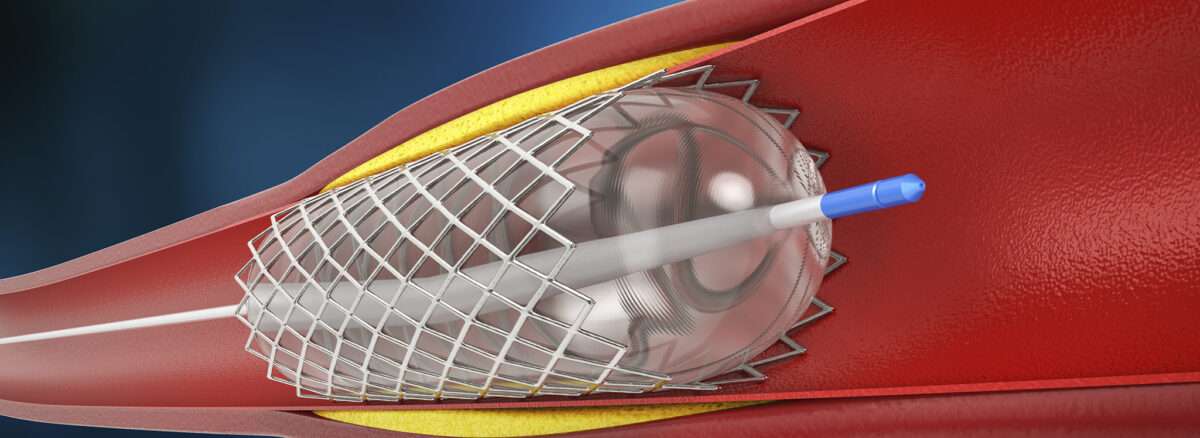
Stent application is a frequently used application in case of stenosis or obstruction in the vessels feeding the heart. After the diagnosis process performed with coronary angiography, problems on the coronary arteries can be detected clearly. After this point, the treatment process is planned and one of the main actors of the treatment process is mostly stent applications. In this procedure performed on the coronary arteries feeding the heart, stenting alone may be sufficient, or it may be performed simultaneously with balloon angioplasty. In some cases, balloon angioplasty alone can also be used.
The main function of the stent in the vessel can be seen as providing support within the coronary artery. The stents, which are mostly made of metal material, are in the form of a tube. As a result of modern medical studies and advances in medical technology, more different, safe and quality stent materials have emerged. Catheters are assisted to place the stent in the coronary artery where the problem is experienced. In the stent procedure applied simultaneously with balloon angioplasty, the stent is first sent to the narrowed area and fulfills its support function. Then the balloon is moved to the area with the help of a catheter. At this point, the balloon is inflated so as not to damage the vessel and the expansion process is completed. The balloon is then deflated and removed, but the stent remains. The stent ensures the protection of the operation performed at this point, and over time, the vascular cells cover the stent and perform a healthy improvement. In the case of 1 or more stenosis and occlusion in the coronary arteries, stent treatments show great benefits, but in advanced cases, surgical options should be considered.